
Professor-Led Orthopaedic Team · Temos-Accredited Hospital · Antalya
Hip Replacement Surgery in Turkey
Hip arthritis can make walking, sleeping and even putting on socks painful. A hip replacement is one of the most established operations in orthopaedics. At NewMe it is planned from your own X-rays and performed by our orthopaedic professors at Anatolia Hospital in Antalya, with physiotherapy from the first day.
Walking with support
Within 24 hours
Hospital stay
About 3 nights
Time in Antalya
About 10–14 days
Everyday activities
Around 3 months
OVERVIEW
What is hip replacement surgery?
Hip replacement (hip arthroplasty) replaces the worn ball and socket of the hip joint with artificial components — a stem and ball in the thigh bone and a cup in the pelvis. It is mainly used for osteoarthritis, but also for other conditions that damage the joint. At NewMe it is performed by Prof. Dr. Ferhat Güler, Prof. Dr. Baver Acar or Doç. Dr. Yusuf Alper Katı at Anatolia Hospital in Antalya; most patients walk with support within 24 hours. The NHS guide to hip replacement explains the operation in more detail.
1 · Assessment
Your surgeon reviews X-rays of your pelvis and hip to confirm the damage and plan the implant size and position.
2 · Surgery
Under spinal or general anaesthetic, the damaged ball and socket are replaced — usually in 1–2 hours.
3 · Early mobilisation
Physiotherapy starts the same or next day; you walk with a frame or crutches within about 24 hours.
4 · Rehabilitation
Exercises rebuild strength and balance, with simple precautions while the hip settles.
OPTIONS COMPARED
Which type of hip implant is right for me?
Hip implants are fixed to the bone in different ways. Your surgeon chooses from your age, bone quality and activity level.
| Feature | Cemented | Uncemented | Hybrid |
|---|---|---|---|
| How it is fixed | Bone cement holds the components | Bone grows onto a textured surface | Cemented stem with an uncemented cup |
| Typical choice for | Older patients or softer bone | Younger, active patients with good bone | A combination suited to many patients |
| Early stability | Immediate | Builds as the bone grows on | Immediate stem, cup bonds over time |
🦴 All three are well-established. Your surgeon explains the implant chosen for you, and you receive its make and size for your records.
IS IT RIGHT FOR YOU?
Am I a candidate for hip replacement?
Hip replacement is considered when hip pain and stiffness seriously affect your life and non-surgical treatment has not helped enough.
✓ Hip or groin pain limits your walking, sleep or daily tasks despite painkillers or physiotherapy
✓ X-rays show significant damage to the hip joint
✓ You are well enough for surgery and to fly — long-term conditions are reviewed in advance
✓ You can follow simple hip precautions and daily exercises for several weeks
It may not be suitable with an active infection, uncontrolled diabetes, certain heart or lung conditions or a very high BMI. We tell you honestly if that is the case.
YOUR SURGEONS
Who will perform my hip replacement?
Your operation is performed by one of NewMe’s orthopaedic surgeons, who also reviews your scans beforehand. Your surgeon is confirmed in writing before you book.
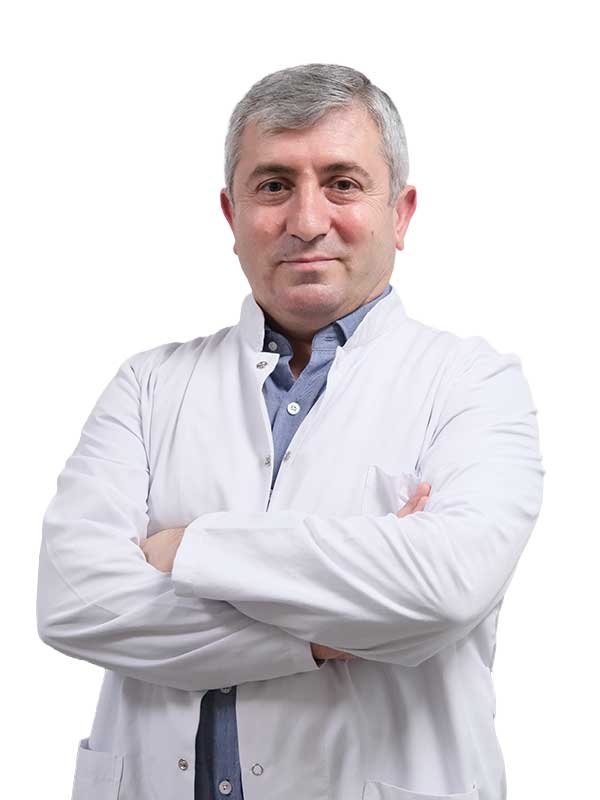
Prof. Dr. Ferhat Güler
Professor of orthopaedics in practice since 2007, performing total hip replacement alongside limb lengthening and deformity surgery.

Prof. Dr. Baver Acar
Professor of orthopaedics performing total hip and knee replacement and shoulder and elbow surgery.

Doç. Dr. Yusuf Alper Katı
Associate professor and member of the Turkish Hip and Knee Arthroplasty Society, with a background in pelvic and hip trauma surgery.
YOUR HOSPITAL
Where is my hip replacement performed?
Your operation and hospital stay take place at Anatolia Hospital in Antalya — one of NewMe’s contracted institutions, accredited by Temos for Quality in Medical Care. Anatolia Hospital appears on the Turkish Ministry of Health’s list of hospitals authorised for international health tourism. After discharge you recover nearby, with your coordinator and physiotherapy organised around you.
YOUR TIMELINE
What is recovery like after hip replacement?
Days 1–3 — Hospital
Physiotherapy starts straight away and most patients walk with support within 24 hours. You learn how to move safely with your new hip.
Days 4–14 — Antalya
You recover near the hospital with physiotherapy; your wound is checked and your surgeon confirms you are fit to fly.
Weeks 3–6 — Home
You build up walking and strength, following your hip precautions; many people move to a stick and drive again around six weeks.
Month 3 and beyond
Most everyday activities are back by around three months, with continued improvement over the first year.
🧑⚕️ Physiotherapy from day one
Physiotherapy starts in hospital and continues while you recover in Antalya, with a home programme to follow afterwards.
🩸 Clot prevention
You receive blood-thinning medication and advice on stockings, hydration and moving during your flight home.
🪑 Hip precautions
Simple rules — such as not bending the hip too far — protect it while the tissues heal. Your physiotherapist shows you how.
💬 Follow-up at home
12 months of planned follow-up and our WhatsApp aftercare line for questions after you return.
SAFETY
What are the risks of hip replacement?
Hip replacement is a well-established operation, but every operation carries risks. Your surgeon explains them openly before you decide.
Common and expected
Pain, swelling and bruising around the hip in the first weeks, and tiredness while you recover.
Less common
Wound-healing problems, blood clots in the leg (DVT), a small difference in leg length, and dislocation of the new hip, most often in the first weeks.
Rare but serious
Deep infection of the new joint, a clot travelling to the lungs, nerve or blood-vessel injury, fracture around the implant, and loosening that needs further surgery.
How we reduce your risk: careful assessment of your scans and health before you travel; pre-operative blood tests, ECG and an anaesthetist check in Antalya; antibiotics and clot prevention; precise implant planning; physiotherapy and hip-precaution training; and a fit-to-fly review before you go home. If the checks on arrival show surgery is not safe, the operation does not go ahead.
PRICING
How is hip replacement priced?
Every case is quoted individually after your surgeon has reviewed your X-rays or scans. Your written quote lists exactly what is covered — surgeon’s fees and anaesthesia, hospital stay, the implant, pre-operative tests, physiotherapy and VIP transfers — and your hotel near the hospital is arranged by your coordinator and itemised on the same quote. Your written quote is your final price, with no hidden hospital or implant fees.
FOR UK PATIENTS
Planning hip replacement in Turkey from the UK
NHS and hip replacement
Hip replacement is a planned operation on the NHS, and waiting times vary by area — you can check typical waits on My Planned Care. The NICE guideline on joint replacement (NG157) sets out what good care looks like.
Direct flights, about 4 hours
Antalya has direct flights from London, Manchester, Birmingham and other UK airports. UK passport holders can visit Türkiye visa-free for up to 90 days.
English throughout
A free assessment from your scans, English-speaking coordinators at every step and a written plan before you book.
Records for home
An English-language surgical report, your imaging and the make and size of any implant, so your GP and physiotherapist can continue your care.
New to treatment abroad? Our step-by-step guide for UK patients walks you through the whole journey.
QUESTIONS
Frequently asked questions
How long does a hip replacement last?
Most hip replacements last at least 15 years, and many last considerably longer. Your weight, activity level and implant position all play a part.
What is hip resurfacing, and do you offer it?
Hip resurfacing caps the ball of the hip instead of replacing it. It is now used only for a small group of carefully selected younger patients, so most people are better served by a total hip replacement. Your surgeon will tell you if it is worth considering in your case.
How long will I stay in Antalya?
Usually around 10–14 days: about three nights in hospital, then recovery nearby with physiotherapy until your surgeon confirms you are fit to fly.
When can I walk, drive and go back to work?
Most people walk with support within 24 hours, drive again at around six weeks and return to desk-based work in six to eight weeks. Physical jobs take longer.
Is it safe to fly home after hip surgery?
Flying raises the risk of blood clots, so you fly only when your surgeon confirms you are fit to fly. You receive clot-prevention medication and advice for the journey.
Can I send my X-rays before I travel?
Yes, and we recommend it. A recent X-ray of your pelvis and hip lets our surgeons confirm whether a replacement is right and give you an accurate plan.
Which hospital is used?
Anatolia Hospital in Antalya, one of NewMe’s contracted institutions, accredited by Temos for Quality in Medical Care.
What happens if something goes wrong after I get home?
You leave with an English-language surgical report and your implant details, and our team stays in touch on WhatsApp. Your surgeon advises remotely and, if needed, on the next steps with your local doctor.
Ready to move without hip pain?
Send your hip X-rays for a free, honest assessment from our orthopaedic surgeons — no pressure, no obligation.